Tuesday, March 30, 2010

Getting back into Istanbul, was like arriving at a whole new city. The two weeks I had been away, the city had seen a complete transformation into spring. The colors were more vibrant, the people seemed to walk with more pep in their step, and the amount of tourists seemed to jump ten-fold. My last days spent Istanbul were a whirlwind of shopping for friends and family. Finding all the deals was no easy task!
I took a break to head out to the Prince Islands, a chain of islands that can be seen from many points in Istanbul. I stopped in the biggest island to see the large and often times abandoned wooden houses on the forested island. None of the inhabitants are allowed automobiles, just the police and city workers. This gives the island a character as the main form of transportation is horse drawn carriage. The streets are all cobble stone, with very few people out on them, it is easy to feel alone as you walk just a block or two off the city square.
The last event I want to write about is the soccer game that I got to attend. I walk by the huge, Beshiktash stadium often on different outings, but never knew I would have a chance to see a game. The stadium was packed, but we found a corner that was available to watch the game. It started out slow, and with the home team down 2 to 0 at half time things looked bad, but the second half brought lots of excitement with Beshiktash scoring three goals and winning the game!! It was fun to enjoying the energy of the massive crowd and curse and cheer with the rowdy group! This is where I got to use all the Turkish I have been learning over the last three months!

Wednesday, March 24, 2010

The Rails Back to Istanbul

The journey out of Tbilisi, was on rail at eleven at night headed to Batumi, Georgia. The train departed and arrvied without any problems. With sunrise, we had arrived at the Black Sea. The city of Batumi has a lot of character. It has a large port and a backdrop of high mountain tops. The time I spent in Batumi was spent wondering around the city.
There is a beautiful boulevard that meets the sea and heads into the city center. This street is covered in sculptures, fountains, and citizens enjoying the sunny afternoon. Well, that is all I can say about Georgia. It was a wonderful week of discovering a new place, but alas, it was time to head back to Turkey.
On our way back to Istanbul, we made a stop in Ankara, the capital of the country. This city was expanded very quickly as Ataturk rose to power in the 1920's. Ankara is beautiful city and much more interesting than I thought. I was expecting an industrial city, built around the political center. We went to the Ataturk Mausoleum to see what all good Turks should go to see in their life.
It was built to resemble an Egyptian Temple. It was more impressive than I was expecting. Many people were in the museum. The day was quite enjoyable and at night we jumped aboard the night train back to Istanbul. Here I sit, back in Istanbul starting to pack up my things to head back to California. It will have to be very strategic packing!

Monday, March 22, 2010

Midnight Train to Georgia

Leaving Malatya was not easy, but the plan was to head to the Georgian border by train through Turkey to the far northeast corner, to the city of Kars. Kars is known to be the coldest city in Turkey. It is located in the mountains, tucked far away from any other Turkish city. The total time in transit was to be 26 hours.
The train never made it to Kars!
Instead, the train carrying around 30 passengers, came to a halt just before minight, about 60 miles from Kars. The problem was a stretch of track that was covered in snow and impossible to cross. For three hours we sat on a motionless train (it didn't matter I slept through it). The hard part was getting to the minibus that was parked some thirty yards away, ready to take us to Kars. The trek between train and bus was in the dark and through thick mud, I carried my heavy backpack and tried not to fall while trailing the man ahead of me who was using his cell phone for a flashlight!
Rolling into Kars around 4:00am, gave me time to take a quick nap at the train station, before watching the sunrise. The snow had fallen heavy on the city throughout the night and into the morning, but the sun was hot enough to warm my skin and give me energy to head to Georgia.
With minimal strife at the border, our path has led to Tbilisi, the country's capital. Though the language barrier continues to be the biggest problem, the food has been good and the beer has been cheap (found a pint for about $0.50).

St. Paddy's Day was spent in one of two Irish pubs in town, listening to a live band belt out 70's classic rock with thick accents!
The cost of living is low and any outsider can see the damage that has been caused by the years of turmoil here. The streets are crowded with people of all ages asking for money, their expressions reflecting their destitude, and the living conditions of many of the residents look like the next gust of wind might take their shelter away. Though the city of Tbilisi has a lot of beautiful buildings, parks, and scupltures, and is working toward fixing up certain sections of the city.

Wednesday, March 17, 2010

The City of the Golden Apricot

The original plan was to head to Diyarbakir, the day before my birthday on March 12th. As it is the largest city in the area, it seemed that it would have a club or two to offer for a fun night out. Upon arrival in the city, the hotel manager and a friendly man helping with directions, both told us that it was not safe for people to be out past dark as crime was high in the area. The next morning, daylight brought an awareness of what the city actually looked like or as much as you could see. The city is in desperate need of clean up, there was trash everywhere and the air pollution was intolerable. So we boarded the one o'clock train headed out of town. The destination was Malatya, apricot capital of Turkey! The city was beautiful, so clean, friendly and an abundance of color.
For the 13th, my birthday, we headed to Darende, a village near by recommended by the locals in Malatya. The first stop was a small waterfall that didn't quite live up to the description offered to us by the locals! No matter, we wondered on. down the road from the water fall, I had my first hitchhiking experience, being picked up in a tractor with two old men with many questions.
After a short ride to the opposite end of the village, we found a great bungalow to eat a beautiful meal of fresh fish at the price of only $4. As the sun began to set we caught the last bus back to Malatya.

As for night life, this city, like every other in Turkey outside of Istanbul is lacking. No problem, we bought some beers and drank on the balcony of the hotel staring out at the picturesque mosque in the city center.
The old city of Malatya, was the destination for the following day. We enjoyed a cup of tea at a tea house dominated by men in the middle of a Sunday afternoon. Tea was under $0.25 each. Can you find me?
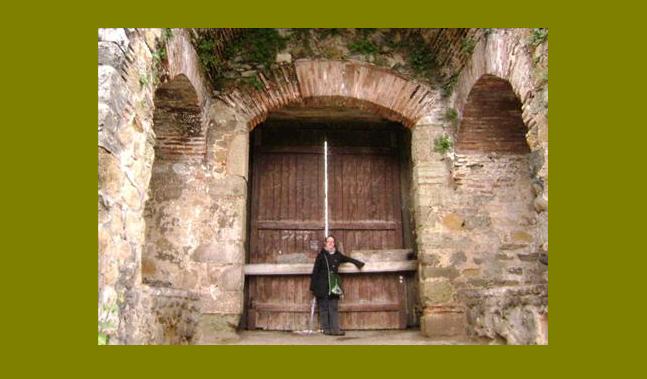
Ya, that is me with the green purse! Well, so much to write and so little time. I will try to update again soon and inform you of the adventures through northern Turkey and into Georgia!

Thursday, March 11, 2010

On the Move

So much to report, I don't know where to begin! On Saturday, I left Istanbul at midnight on a 20 hour trainride with the destination of Adana, in the south of Turkey. There has been already five cities that I have passed through, but I will list the highlights here!
Starting in Kahramanmaraş, the focus was food! The city is home to the Mado company, the largest producers of dondurma. Dondurma is a combination of goat milk, orchid extract (called sahlep) and sugar. This mixure is then beaten with a long stick until its consistancy is thickened and then cooled. It is the only ice cream I have eaten with a knife and fork. The day began with sahlep (a hot drink) and ended with delicious flavors of dondurma. The hours between these wonderful Turkish treats was filled with so much food, I cannot begin to list it all here.
In Gaziantep, there was a beautiful mosaic museum. All of the relics had been pulled from an ancient Greek city located nearby. The detail in each of the mosaics was unbelievable.
They depicted Greek mythology or were intricate geometric shapes. My photos are quite dark, due to the fact no flash was used, but the museum website offers better photos if you're interested. www.gaziantepmuzesi.gov.tr
Next stop was Şanlıurfa, the prophet Abraham's city. The story is told that Abraham was cast into the fire, but God chose to save his life by turning the fire into a lake.

The Balıklı Göl (fish lake) is the main attraction in this very friendly, clean, and interesting place. During the day, people gather near the lake to feed the multitudes of fish that jump out of the water to grab at the food being thrown to them.
There was a castle there with the outer walls still holding strong, but with little of the interior left. The views of the city were nice though! Urfa is also the birthplace of the prophet Job.
This is my travel buddy, Kanber. A man that does not take life seriosly! Here, sporting a tradional purple scarf, worn by old Syrian men and women in Urfa. Now, the time has come to find out the how to get to the next ancient destination, we are headed to the mountains.

Saturday, March 6, 2010

Feeling Fine


As you can tell I am feeling better!! Yesterday, I took on an adventure to Sariyer, a section of Istanbul in the north, along the river. It is lined with ornate, old wooden houses, in a variety of colors, all belonging at one time to one of Istanbul's rich.
Some of these houses have better battered by the wind and salt water and no longer show the brilliance they once were. To me, they seem to have some mysteries surrounding them, of the lives that were spent within their walls. To restore these buildings would take millions of dollars, so they are left to deteriorate, until the city agrees they can be destroyed.
There is a path along the riverside for pedestrians that extends for miles. It was where I spent my whole day. Finally, feeling energetic again, all I wanted to do was walk in the fresh air. I walked for over three hours, only pausing to snap a photo of a scene that I enjoyed.
Then, the warmth of the day vanished with the sun and the hunger in my stomach hailed the next minibus headed to Taksim Square where I could find some warm gozleme (Turkish crepes filled with spinach and cheese).

Tuesday, March 2, 2010

Gathering Strength

Very little to report at this point, I have been sitting in the hostel for the past two days. I have been struck with food poisoning and am having a hard time recovering. I ate something that was offered to me in the hostel, and I think it had sat out too long. I only had two bites, but it has been enough to put me in bed for two days, with an occasional walk to get some soup.
Back on Sunday, I went to Eyup, in Istanbul. It is one of my favorite sections of town, because it is close to me, but with no tourists. It has a strong Muslim popultaion, where people seem friendlier, though finding veggie options can be harder!
This visit to Eyup, had two missions. I wanted to go to the biggest cemetery in Istanbul, and see more sections of the ancient city walls that stretch for miles around the part of town called the Golden Horn. The photo above shows the cemetry, with the typical Islamic tradition of marble coffins placed above ground. This cemetary is on a huge hill and has thousands of gravesites.

This is yet another part to the Roman city walls that wrap the city in history. You can see in the photo that spring is on the way. Flowers are popping up all over. Tulips have begun to show their leaves and some even brave enough to bloom. Within the next month, this city will blossom with clolor along all of its busiest streets. Well, back to relaxing and recooperating through this battle that is insuing in my stomach. Hope to get out and about tomorrow.

Wednesday, February 24, 2010

Scaling the Ancient City Walls

Walking through the thousands of streets in Istanbul is like a historic maze. Each neighborhood of the city has its own unique feeling and image. The history changes from one street to the next. With Istanbul being the European city of culture for 2010, there is a lot more money going into restoring various sites within the city.
I am hoping that some part of this mosque will be opened by the time I leave as it is one of the most unique buildings in the city.
Yesterday, with the sky indecisive with greyish clouds threatening to shower, the scene was set to visit the a large fortress famous for its dungeons. The Yedikule (seven towers) Fortress started construction around the fifth century. The complex is only one of a many that served as the capital of the Byzatine Empire known back then as none other than Constantinople.
It is interesting that this site, like the Rumeli fortress that I visited ealy in my stay, had no tourists within the stone walls. Just a 20 minute train ride out of the city center, and there isn't any foreigners to be seen.
After trying to see each section of the city, I have gotten a sense of the size of this sprawling metropolis. It is over 700 square miles, that's over twice as big of area as New York City. Oops, what was the topic?.. a saying that many Turks use when their rambling has taken them away from their original idea!
Back at the Yedikule, the stone stairs rose to the tops of the towers to give great views of the Marmara Sea. For those of you who don't know, I am not a fan of either steep stairs, nor heights. Kanber thought this was a hilarious site watching me cling to the sides of the stones, trying not to look at the ground below. This photo was taken without my permission and gives a sense of the time that went into the descent from the high walls.
I did make it down from the fortress walls with no injuries, only to return to the hostel later in the evening to fall down a couple of stairs, twisting my ankle and making me realize I will never be a competitor in any extreme sporting events!

Friday, February 19, 2010

Info from the Infidel

A heat wave has hit Istanbul and with perfect timing. The latest fascination of mine has been the beautiful mosques that are around every corner here. These structures with the dome-shaped rooves and their minarets standing tall beside them, like guards at attention, are a visible reminder of the success of the Ottoman Empire. There is no doubt the Ottomans felt strongerly about having a place for every citizen in their empire to pray in.
There are many characteristics that the mosques in this area have in common. As noted above, each mosque is equipped with a minaret (most have one, but some have up to six). This tower is where the call to prayer was once shouted from, but now there are loud speakers that echo the melodic and hypnotic words announcing the time for prayer is approaching. A separate section for women to pray is common usually located behind a screen of some sorts or in the back of the main gathering room. This photo was taken inside the Mahmut II Mosque, the gold screen is covering the women's area on the second floor. There are several faucets outside about two feet off of the ground, available so the followers can wash their hands and feet before the entering the mosque to pray. There is a raised platform in the center of the interior, where the Imam (the religious leader) gives a speech every Friday in the late morning. The mosques built by the Ottomans typically have high domes.
I have been visiting many of the mosques in the area. Unless it is near one of the five prayer times, the mosques are usually empty and can be extremely peaceful. Before entering, I wrap my scarf around my head and slip off my shoes, then step into the fu lly carpeted, uncluttered open space. I haven't converted completely to the Muslim faith, but I sure do look good with the veil!

Saturday, February 13, 2010

Sultans of Swing

Back in Istanbul, and took a couple days off of the sightseeing to relax back into the city life and finish up my book! There is a new agenda to the sites I am seeing around the city. I have moved away from the history of Ataturk, to the Ottoman sultans and the empire they built. They had land, they had power, they had money... but what made these men in funny hats tick? So far, I have only seen the two big palaces Topkapi and Dolmabahce from the outside as admission is quite high, I will save those for another time.
Instead, there is a hidden palace named Yildiz built in 1880, by Sultan Abdulhamid II, one of the last Ottoman sultans in the time of Ottoman demise, when he refused to be living on the river for fear of an attack. Although, the Ottoman Empire was in decline at the time of the construction, one wouldn't know that by walking through the extravagant palace. Each room had silk furniture, dozens of yards of fabric hanging around the high windows, and arranged in a different way in every room. Paintings of nature scenes covered every wall and celling. There were ornate chandeliers that hung in every room that had been shipped from France. The visitor gets the impression no price was too high for the sultan. In the grand ballroom as I would call it (though I don't think that was what the Ottomans referred to it as) a hand woven carpet laid on the ground, not just any rug, but the largest continuous rug ever made. There were no photographs allowed inside the palace (it wouldn't have matter because my camera was out of batteries away) so, all of these photos were taken from the web.
The palace was set back in a park with the same name, that at one point was probably quite beautiful, but now looks quite run down and is filled with wild dogs.
Next up, is the Ihlmamur Pavilion.
This small, but intricate building was built for an afternoon resting place for Sultan Abdulmecid, after hunting in the nearby hills. The hills now are covered with hundreds of apartment complexes and one must try hard to imagine the what the scene would have been like back in 1850.
Here is Sultan Abdulmecid in his best attire, looking like a fine hunter, indeed! As I learn more about these sultans I will write to inform the masses!!

Sunday, February 7, 2010

Island of History and Mystery

It seems that this island is filled with amazing glimpses of the distant past and tranquil views of the Mediterranean from every mountain top. A chance to climb the countless steps of St. Hilarion Castle in the Kyrenia mountains leaves one thinking of the Byzantine's in the tenth century climbing the steep cliffs to build their fortress, protected by the ability to see all who may come to cause harm. It is said that this castle was the inspiration for the queen's castle in Disney's Snow White and the Seven Dwarves.
Though you cannot see the full layout of the extensive its three tiers, you can get an idea of the setting of this fairy tale castle. With very few tourists taking the limestone stairs from one level to the next, there was a peaceful energy in the dozens of rooms now left to withstand the elements nature releases. The view of the city of Girne with the Kyrenia Castle and the Mediterranean on such a sunny day was an experience I won't soon forget.
Besides beaches, castles, and churches/mosques, Cyprus has other attractions to offer. As you enter the Greek side of Lefcoşa (Nicosia as Greeks call it), it seems one steps into a large mall. Everyone there speaks English and you can find anything the westerner might desire. The most appealing part of my one hour spent on the Greek side of town was the realization that wine is cheaper there!
In the countryside to the west of Lefkoşa, there is a bounty of orange and lemon trees. Within a half hour there were plenty of bags and pockets full of the produce and fresh juices to be made. The drive home smelled so sweet!

Friday, February 5, 2010

Why not Cypriot?


Istanbul is getting covered with snow...so the timing was right to fly to Cyprus last Tuesday. I have already learned a great deal about this small Mediterranean island, that is shaped something like a guitar. I am traveling alongside my friend, Kanber, and we have been welcomed into the house of Rıdvan.
Upon arrival, I was struck by the extreme diversity in the city of Lefkoşa (Nicosia), the city of our arrival. It is obvious that many different countries have controlled the area. There is the Turkish writing across the billboards and stores, along with a few scattered minarets and sculptures of Atatürk. Another detail one cannot miss is the traffic driving on the opposite side of the street (showing definite British influence). Beyond that, there ıs a huge Venetian fortress dominating the downtown. Some of this fortress also forms part of a wall that separates the northern one-third of the island (the Turks who claim sovereignty) from the southern two-thirds (the Greeks). The only country in the world to recognize the northern part of the island as a separate entity (Turkish Republic of Northern Cyprus) is the Turks. Passing to the other side takes nothing more than a paper and your passport and seems like more of an annoyance than anything. Beyond this, the country has a rich history, like the other countries of the eastern Mediterranean. The first stop was the port town of Girne (this can get a bit complicated as most cities here have several names, a Turkish, Greek, and sometimes English name). The afternoon was spent wondering through the stone walls of the Kyrenia Castle, staring to the north across the sea at the mountains of southern Turkey and to the south, at the mountains towerıng above the city. Today, the destination was Mağusa (this city has five different names!). In the center of the city is this building... Can you guess what it is? Its a Venetian church, with an addition of a quick minaret and WHAPOW! converted to a mosque. Its that easy!! The entire city is a scattered archeological site containing examples of Venetian architecture that took us all day to weave through. This is the Othello Castle, in Mağusa, which as all good castles should, included a moat and a dark hallway leading to the unknown!

Tuesday, February 2, 2010

mmmmm...delicious

As stated previously, the following article will be a look at what a vegetarian would find appealing in Istanbul. Traditional Turkish cuisine is a rainbow of colors and prepared in a variety of ways. My favorite foods are called dolmas, which means to stuff in Turkish. The average American thinks of a dolma as the grape leaves wrapped around rice and spices, which are referred to here as sarmas, or to wrap. There are many different vegetables that are stuffed here such as; zucchini, eggplant, peppers, tomatoes, and potatoes. The filling always contains rice, but along with it can contain a world of possibilities, but most frequently have tomato paste, tomatoes, pepper paste, raisins or currants, pine nuts, and variety of spices. I have tried many of the dolmas and have even had the pleasure of learning how to make them, so you are all invited to my Turkish dining night (the date of which will be announced in the near future)!
Another food found on the tabletops of many restaurants, is pickled peppers. When I first tried these one inch to two inch peppers, the color of my face turned a shade of magenta that did not look nature. I found myself gasping for breath and hurrying to the fridge to soothe my mouth with yogurt. Now, with practice, I have reached the capacity to eat two or three before the beads of sweat start to form on my forehead. As you can see, there are many things that are pickled here besides just peppers.
Kofte is also a well known and loved food here, which translates to meatball. The kofte also comes in many forms. There is a vegetarian version that is delicious and is uncooked. It is made by kneading a couscous like grain for an hour, mixing in tomato and pepper paste, greens, parsley, and spices like, red pepper flakes, cumin, oregano, and salt and pepper. These kofte take the shape of the inside of a persons hand and they are topped with lemon. It is all very good, though looks a bit odd!
Wow, I could go on for a while about the food I find enjoyable and realize that I might do a part two for the sweets here that I have been enjoying on a daily basis, but I will conclude with drinks. There is the obvious Turkish coffee that everyone knows about, but on average a Turkish person consumes around six cups of tea a day. The main type is like the dark Ceylon tea, but there are fruity and spicy versions available (apple and licorice are my favorite). Ayran is also a popular drink, which consists of yogurt, salt, and water. I am still trying to get a taste for this drink. Well, that is all I can write at this point I am getting hungry once again and think I will go to get some chorba (lentil soup)!

Thursday, January 28, 2010

Enjoying everyday life

As I was searching for my next activity to blog about, I concluded I should just write down the routine that I have found myself getting into comfortably. Every morning, I wake up with a cup of Turkish coffee. I have perfected the ability to make this thick as mud coffee, though I believe the caffine content can only be half of American coffee! The mornings are often spent cleaning the top floor of the hostel where the living room and kitchen are situated. Next, it is time to make a plan for the day. Plans often included walks to parks around town, to random museums, or to venture into one of the many markets in search for a good deal. Here are some photos of the past week or so of events! First, this is the Islamic Art Museum. This museum is in the main tourist square called Sultanahmet Meydan.
It is housed in a palace that once belonged to a sultan. There are hundreds of small rooms with chimneys in each, along with a few large ballroom size expanses. The collection included beautiful Turkish rugs (some dating back to the fourth century), a lot of Islamic calligraphy in Arabic letters, and many relics from archeology digs from around Turkey.
Next up, there are the incredible markets here. This is the Saturday organic market, that this past week was covered in snow. It is always a beautiful site with kind people to try to practice my pathetic Turkish!
Another of my favorite pass times is jumping aboard one of the dozens of ferries that cruise between the European and Asian coasts. Transporting the citizens from home to work and then back again. This is a photo from sunset today off from the ferry back from Kadikoy!
These are the two most famous mosques in Istanbul. The one on the right is Hagia Sophia (now turned into a museum) and the other Sultanahmet (which gave its name to the area of town that it is located). This photo also includes some of the hundreds of seagulls that follow the ferries on their trek across the water in hopes the passengers aboard throw them some bread!! In writing this post, I know the next of my topics will be food (yemek) of Istanbul. My mission now is to do some research!

Monday, January 25, 2010

Greatest Turk ever?!?


The snow has been falling here in Istanbul for over four days now, covering the whole city in a blanket of white. It has given a certain magic to an already beautiful city. The snow could not stop me from wandering the steep, slippery sidewalks for the first couple of days, but as the snow continued to fall I started to look for activities to do inside! With some persuasion from my friend and the owner of the hostel, Kanber, we headed to the military museum. To my surprise it was an educational and interesting experience.
Upon arrival, a concert was underway by Mehter, a Ottoman military band with international recognition. Along with a small crowd, we sat and listened to the drumming fill the auditorium with sounds of the battlefields of the Ottoman Empire. The Ottomans definitely held the mustache in high regards, as all of the men in the Mehter band sported them, a few looking ridiculous wearing thick fake ones.
After the concert, we marched through the halls of what was once the Ottoman military college, looking at old artillery, paintings of sultans, and a classroom of were the first President Ataturk once was a student. This room alone with its creepy looking mannequins all positioned facing the front of the classroom, raised many questions for me. Who was this Ataturk with the crazy eyebrows? Here is what I found out... The Ottoman Empire came to an end in 1922. As an undefeated Ottoman general, he quickly rose to power, as the founder of the Republic of Turkey. Now here comes some interesting information. Before this time people in this area never had surnames, they simply had their first name and then their father's name. Some people had several first names, but never a surname. Ataturk required all Turks to go and file for surnames at the government offices (sometimes the choice of the President himself), but first, he wanted a suiting surname for himself... Ataturk, translates into "greatest Turk ever!!" In addition, the man also changed the country's language (to rid it of foreign influence), their alphabet, and dismantled the entire Islamic court system. Any questions about todays history lesson?!

Thursday, January 21, 2010

History comes alive

Look! I can see Asia from here! Today was a great day to walk through Istanbul. With the sun making an appearance I headed to the part of the city called the Golden Horn. Istanbul is divided by several bodies of water, splitting the city on two different continents. I added this map to give an idea of the layout. The circles in the center are where I am staying. If you click on the map you can zoom in on the thousands of mosques, the routes of the ferries, and the multiple bridges, but make sure to include in your imagination the large hills (seven in all) that make every walk in the city a test of endurance.


After spending the morning in a beautiful park, the time came for a cup of nar, fresh pomegranate juice. A bowl of chorba (traditional lentil soup) served as a perfect lunch. This tour of the city included boza (a thick drink of fermented grapes mixed with the perfect amount of cinnamon dating back to the fourth century) in a place that has been specializing in making only this drink for nearly 200 years. Istanbul is never at a loss for history.
This is a church converted to a mosque (with some of the ruins burried underground) and on the left is an Valens Aquaduct built in 368 AD. It still runs half of the original 3,000 ft through the city.